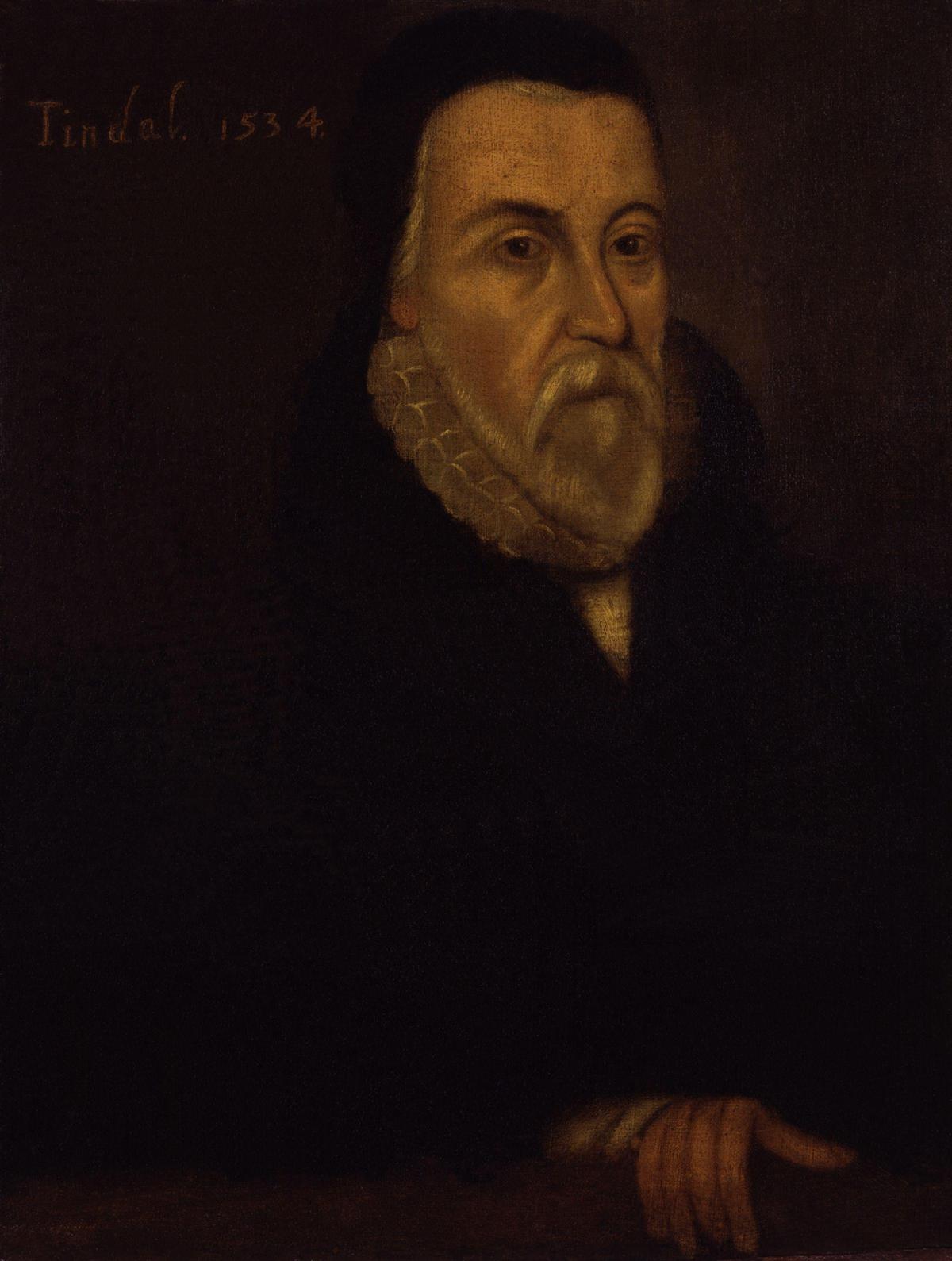
WILLIAM TYNDALE · c. 1494–1536
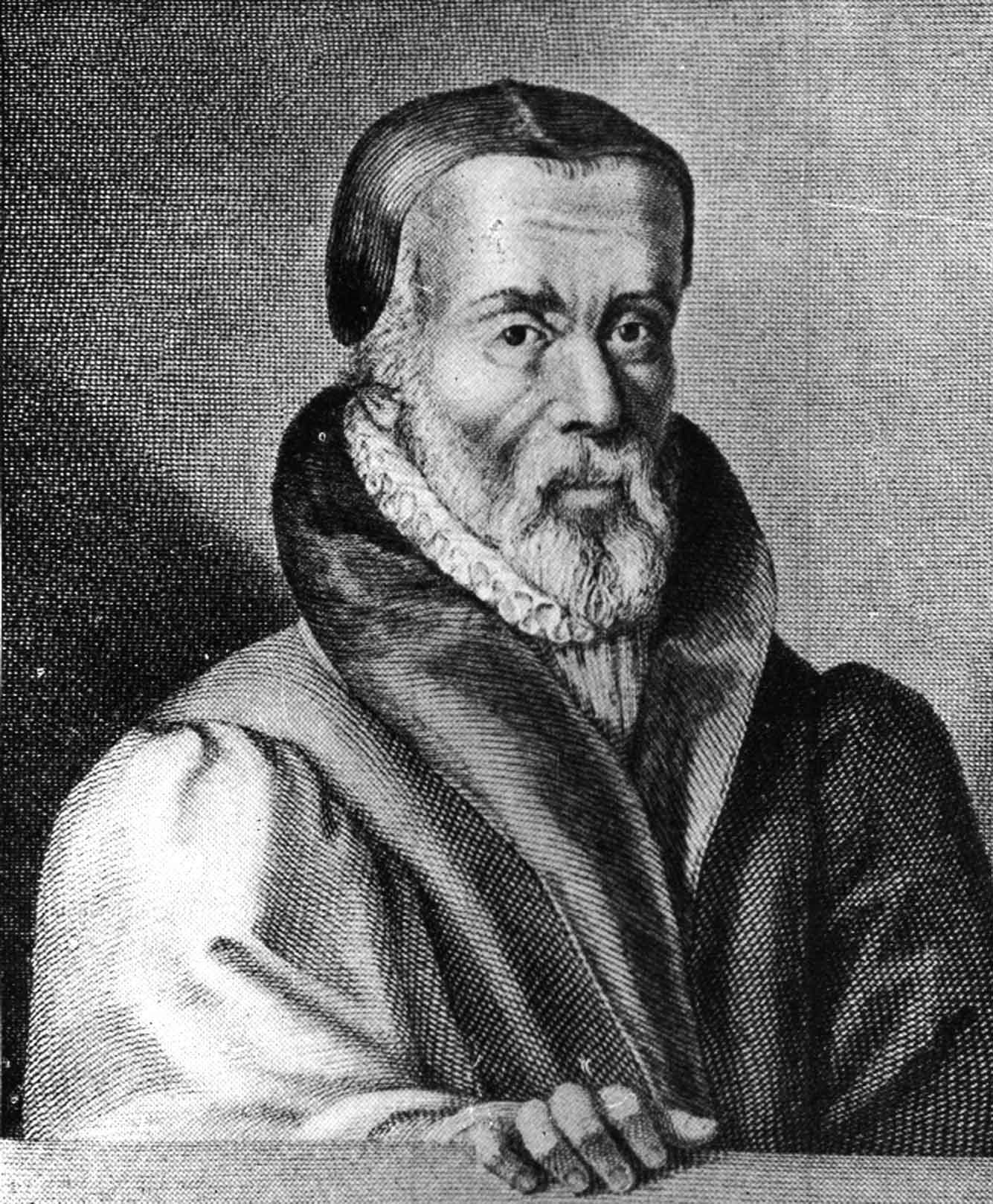
William
Tyndale
"The Architect of the English Language"
He was stabbed through the throat and burned at the stake — simply for wanting ordinary English people to read and speak in their own language. This is the most astonishing story in the history of the English language.
BACKGROUND
After Martin Luther sparked the Reformation, vernacular Bibles spread across Europe — yet England still strictly forbade translating the Latin Bible into English. The Church and the ruling class believed that ordinary people had no right to read God's word in their own tongue — in English.
Oxford scholar William Tyndale defied this ban with his whole being. He believed every Englishman had the right to read the Bible in English, to speak English, to think in English. For this belief, he was forced to flee England and live in exile on the Continent.
In 1525, he completed the English New Testament in Cologne and had it printed — the first person in history to publish the New Testament in English, translated directly from Greek and Hebrew originals. Yet copies smuggled into England were seized by the Church and publicly burned in London.
6 OCTOBER 1536 · VILVOORDE, BELGIUM · THE MARTYRDOM
Under a secret order from Henry VIII, Tyndale was arrested on the Continent and thrown into prison. On 6 October 1536, at Vilvoorde in Belgium, before the flames were lit — Tyndale was brutally stabbed through the throat.
Why did they do this?
Because they were terrified — terrified of him speaking English!
Terrified that his voice would let ordinary people understand the Bible.
Terrified that once English became a language for everyone,
their grip on faith and thought would collapse entirely.
A man who simply wanted his countrymen to read and speak in their own tongue was considered more dangerous than death itself. They had to silence his voice before they could burn his body. That was the world English once lived in.
His throat pierced, his body bound to the stake, Tyndale used every last breath to cry out a prayer that would shake history —
"Lord, open the King of England's eyes!"— William Tyndale · last words, 6 October 1536
Just over three years after Tyndale's death, Henry VIII ordered an English Bible placed in every church in England. The prayer he died for had finally been answered.
HIS SPIRIT
Tyndale was not fighting for scholarly glory or academic recognition. He was fighting so that the most ordinary English person — even a ploughboy in the field — could speak English freely and read words written in English. For this, he endured a pierced throat and the stake.
He gave his voice, his freedom, and his life so that ordinary people could speak English, read English, and think their faith in English. This fearless devotion to bringing the English language to the people remains one of the most astonishing acts in the history of any language.
LEGACY
After Tyndale's death, the fickle Henry VIII reversed course and permitted Bible translation. Within four years, four different English Bible versions appeared in England — all of them based substantially on Tyndale's translation.
Approximately 84% of the New Testament in the 1611 King James Bible derives directly from Tyndale's work. Words he coined — 'scapegoat', 'atonement', 'Passover' — are still in everyday use. His mastery of language has never been surpassed.
Today, when we read, write, and speak in English with ease — when we use English to express love, dreams, and thought — please pause and remember the story of William Tyndale.
It is because of heroes like him — willing to die for the English language — that we today possess a language so rich, so free, and so full of power.
If you have ever felt that English is "just a tool," that learning it is a burden, that you cannot find the passion for it — think of Tyndale.
Think of the man whose throat was pierced, yet still cried out his prayer. Think of the freedom he bought with his death — the freedom we take for granted every day.
Love English. Cherish it. Use it well. Speak it out loud.
That is the finest tribute we can offer William Tyndale — and it is a debt we owe him.
THE HISTORY OF THE ENGLISH LANGUAGE · WILLIAM TYNDALE MEMORIAL